Tuesday, November 22, 2011

A Low and Stable Rate of Inflation

Inflation is an increase in the price level of goods and services in economy over a period of time.

Inflation is measured by:
1) Consumer Price Index (CPI): measure of a change in the price of a consumer goods and services - perspective of producers
2) Producer Price Index (PPI): a family of indexes which measure average change in selling price by domestic producers over time - perspective of sellers

High inflation:
1) makes a country become less competitive in international market
2) causes people to be confused and uncertain about how to spend their money
3) results in menu costs (a cost from continual changing of prices)
4) results in shoe leather costs (people rely more on bank to save on losing interest in bank)
5) positively influences borrowers and negatively influences lenders - income redistribution
6) reduces value of savings
7) can cause economic recession


Thursday, November 10, 2011

What role should the government play in adjusting the economy?

One of the policies that is effective to the economy and society is education and training policy. The government provides education and training facilities that teach people necessary knowledge and skills to adjust to ever-changing economy. The learners are not limited to young people who are getting ready to enter the labor force. The people who lost jobs or retired can also take part in the courses. The major benefit of this policy is that it allows the workers who cannot get jobs due to lack of required skills to find jobs with more ease. It is also advantageous since the government will hire more teachers and trainers, willing and able to educate the workers, giving those educators jobs. The quality of labor will increase as well, as more educated and skillful workers will be provided. All these merits will lead to a more dynamic economy. On the other hand, education and training does have some limitations. Since the government is paying all the money, there exists opportunity cost. If it were not for such policy, the government would be able to spend the money on doing other things, for instance, to build public facilities. In addition, this action is only helpful in long term, because it takes time for the learners to get knowledge and being trained enough to begin working under real situation. Thus, it is difficult for the government to predict how much its opportunity cost will be.

Research and Development is another advantageous policy, which is beneficial to economy and society. It allows firms to develop new production techniques and to look for ways to improve the methods of production. Such enhancements are likely to increase the economy’s potential output. However, it requires much spending for the government, when government offers tax incentives. It costs opportunity cost too when government finances research and development itself. The biggest problem is that, nobody knows whether the research will be successful. There are some possibilities that, despite the effort of researchers, the results of long time studying may not be so encouraging.

Reduction and Elimination of minimum wage is an obviously detrimental policy. The minimum wages may be eliminated or reduced when it is thought that government-set minimum wage is so high that the cost of production is above free market level. The supporters of such policy insist, decrease in the minimum wage can possibly result in a fall in the cost of production and a rise in aggregate supply. However, the major problem is that it will reduce the living standards for those who were working for and were living by minimum wages. Even though the policy may precipitate overall economic growth, it will engender inequality between the Rich and the Poor as well. To make it worse, if the amount of minimum wage either decreases or becomes eliminated, the employers can abuse such abatement as a way to mistreat the workers, for instance, by not paying them properly.

On top of that, deregulation is another example of harmful policy for economy and society. To deregulate means to abate the regulations, in which the government set. This action does have merits. The more freedom to produce with less strict limitation leads the cost of production for the firms to decrease and the aggregate supply to increase. This may result in hiring more workers. However, one very huge demerit of this policy is that without proper regulations, the firms will produce indiscriminately. In other words, they are likely not to consider any environmental issues since their main goal is to make profit. They will think most of their profits thus ignoring what harmful effects they are giving to the environment. Safety will not be concerned as seriously as well. Therefore, despite possible benefits that deregulation may bring to economy, there are environmental and safety problems that may result from such policy which can be very detrimental to our society.

Friday, October 14, 2011

p.s.

I am still working on today's assignment on Words. It will be posted after it's done.

Tuesday, October 11, 2011

John Maynard Keynes

1.What were his early, formative years like?  
He was born in Cambridge, England into a highly intellectual family and was educated in the elite academic British institutions of Eton and Cambridge. Still, he did not wholly dwell on academics and found ample time for literary pursuits and political activities.

2.How did he become the person he became?
 
3.What were his important ideas concerning World War I?   
He was against the conclusions of the Paris Peace Conference (1919) in which Germany was expected to make massive payments to Allied countries as reparations for WWI. His argument was that it would be impossible for Germany to pay the amounts demanded of it. He predicted that the consequences would be very damaging.                                                     
4.What was his influence during the Great Depression?
5.What did he suggest during the years of World War II?
6.What are the "big ideas" for which he is best known?

econ textbook p189

Monday, October 10, 2011

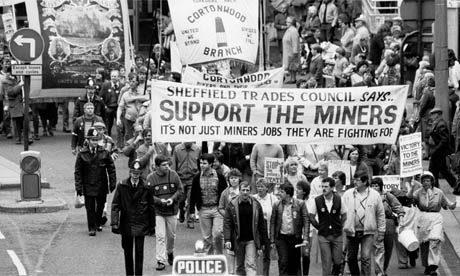
Protester killed in Freeport Indonesia mine strike

A conflict between mine workers and the police resulted in death of one
protestor and injury of many victims.
The strike was caused by angry workers who wanted better payment and working condition. However, it was inevitable since the demand of their copper decreased. The police reacted with guns and the workers threw stones. Even though current situation is quite cooled down with additional number of police officers sent to the site of demonstration, but the company lost production of 35 million lb of copper and 60 000 ounces of gold.


 The protest of unionized workers caused a sharp fall in the production of copper and gold. It negatively influenced the mining economy as a whole. However, such action of the miners is understandable. Since with decreased demand, they should have suffered from decreased wage. Miners are not being highly paid thus furthur decrease in their wages must have been critical. (not finished)

Tuesday, October 4, 2011

Supply-side policies

Supply-side policies 

-Interventionist policies: They are used to improve the occupational mobility of people and let them have more chances of getting jobs. Such policies include providing education, increasing spending on adult retraining programmes, giving subsidies either to firms to train worker or to people and encourage their moving to the area where jobs are available and supporting apprenticeship. 

 * If the government encourages apprenticeship programmes, the people who lack skills to get jobs may be trained by the government and become skillful laborers. Thus, the unemployment rate will decrease, resulting in favorable economic condition. However, such action will bring two disadvantages. First, it is only useful in long term because it takes time to train the workers. Second, there is a high opportunity cost for the government since if it were not for the training programme, it can use the money spent on the training for other purposes, for instance, to build more public facilities.

- Market-oriented/ Free market policies: Government reduces unemployment benefits or legislation that businesses must follow in their hiring, firing and employment practices. 

 *Reducing the unemployment benefits can stimulate and encourage the people without jobs to be more active in getting the jobs because now they are not getting any help or the payment from the government. On the other hand, this policy can worsen the living condition of unemployed people. 

+ add more explanation and pictures


Monday, October 3, 2011

Saudi Arabia to Pay Unemployment Benefits From November

The Saudi Arabia decided to give unemployment benefits from November to encourage a fall in unemployment rate. It will increase the number of workers to work for the kingdom's private sectors and ensure that the Saudi Banks to keep track of the wages earned by the people. Such action was mainly influenced by the government's desire to calm down Arab Spring demonstrations.

After reading the article, I thoght it is wise of the government to decide to pay unemployment benefits since such action will bring many advantages. First, it will stablize the unemployed people both economically and psychologically because they are receiving aid. Second, it can give the people a message that the government 'cares' about the citizens as it is not only giving unemployment benefits but also creating more jobs. Providing unemployment benefits may improve the economic condition of the country.